Friday, 8 March 2019

Ancient updates to Sūrya-siddhānta

Ancient updates to Sūrya-siddhānta

by
Nilesh N Oak & Rupa Bhaty


Abstract


Indian astronomy is original in its conception and is ancient. Indian astronomy book such as Sūrya-siddhānta is well known, most referred and most esteemed. While no one knows for sure how old Sūrya-siddhānta is, opinions abound. The popular view for the timing of Sūrya-siddhānta, range from 6th century BCE to 8th century CE. This is consistent with the latest event of Sūrya-siddhānta update of about 580 CE.

While the longitude data for the Nakṣatra is consistent with this update around 580 CE, there are numerous other measurements and descriptions of Nakṣatra, Sun, Obliquity or Star positions that cannot be reconciled for 580 CE.

We wondered if there were additional instances of updates preserved in the text of Sūrya-siddhānta and if it was at all possible to decipher them with the help of modern astronomy.

This paper presents original research carried out by the authors that identifies instance of another update, long before 580 CE, added to the text of Sūrya-siddhānta. The claim is to be tested using multiple evidence from the Sūrya-siddhānta text by employing sophisticated data of modern astronomy. And while this update is fascinating because of its empirically verifiable nature and due to its sheer antiquity, it is not the only update besides the update of 580 CE. We will share multiple updates validated by other researchers and point out few sections of Sūrya-siddhānta that we think are pregnant with evidence of additional updates. We discuss broader consequences of these findings.

Key words : Sūrya-siddhānta- SS, NCP- Northern celestial pole, SCP-Southern celestial pole

1.1.1.           Introduction

Indian astronomy is original in its conception and is ancient.  Indian astronomy book such as Sūrya-siddhānta is well known, most referred and most esteemed. The details of Sūrya-siddhānta are narrated in a poetic form, not unlike numerous ancient Indian narratives, in the Sanskrit language. It has 14 chapters and 500 verses and covers cosmology, planetary motions, eclipses, conjunctions, star positions, risings/settings, mathematics, geography, instrumentation and model-making.  Sūrya-siddhānta is not a conventional textbook in the sense that it is too succinct and somewhat cryptic for a rank beginner.  It is meant as a concise aid to instruction.  While no one knows for sure how old Sūrya-siddhānta is, opinions abound.  The timing of SS, estimated by these opinion makers, range from 6th century BCE to 8th century CE.
There are several indications in the text of SS that provide us with the clues that it has undergone several updates and modifications.  This is a clue to the ancient nature of the text.  In fact, the evidence for the updates is provided in the text itself.
SS 1:9
शास्त्रमाद्यं तदेवेदं यत्पुर्वं प्राह भास्करः।
युगानां परिवर्तेन कालभेदोऽत्र केवलम्॥९॥
(This is the very same original text that the Sun promulgated. Only, due to the revolution of the Ages, the differences of time are detected).
The revolution of the Ages is in reference to the underlying phenomenon of the precession of the Earth’s axis.  On the other hand, the text is emphatic on the point that the fundamentals of the text itself has been relatively untouched.
Some of the Sūrya-siddhānta script contains Bijopanayanādhyāya after Maānādhyaya at the end of Sūrya-siddhānta which also suggests similar imagery and shows that Māyāsur had authority to do changes in text to reconcile between change of time and imagery.
चक्रानुपातजोमध्यो मध्यवृतांशजः स्फुटः।
कालेन दृक्समो न स्यात् ततो बीजक्रियोच्यते॥५॥
(Due to progression of cycle of time when compared between chosen degrees evidently the imagery doesn’t remain same, therefore operation of analysis and solution is called upon.)

Let’s begin with the latest update to Sūrya-siddhānta that can be easily detected.

2.       580 CE

Specific verses of Sūrya-siddhānta and their astronomy interpretations lead us to an approximate period of about 200 CE through 400 CE.  For example,
SS 1:25-27
पश्चाद्व्रजन्तोऽतिजवान्न्क्ष्त्रैस्सततं ग्रहाः।
नीयमानाश्च लम्बन्ते तुल्यमेव स्वमार्गगाः॥२५॥
प्राग्गतित्वमतस्तेषां भगणैः प्रत्यहं गतिः।
परिणाहवशाद्भिन्नाः तद्वशाद्भानि भुञ्जते॥२६॥
शीघ्रगस्स्वर्क्षमल्पेन कालेन महताऽल्पगः।
तेषां तु परिवर्तेन पौष्णान्ते भगणास्स्मृतः॥२७॥
(The cycle that ends with nakṣatra Revati is called ‘Bhagana’).
or
SS 12:45 states; In the half revolution beginning with Aries, the sun being in northern hemisphere of the Deva-gods, is visible to gods : but while in that beginning with Libra, he is visible to Asura-demons, moving in their hemisphere.
मेषादौ देवभागस्थे देवानां याति दर्शनम्।
असुराणां तुलादौ तु सुर्यतद्भागसञ्चरः॥४५॥
(Vernal equinox begins just before Aries & Autumnal equinox begins just before Libra).
Vernal equinox is considered the point of zero celestial longitude in Indian astronomy.  The celestial longitudes can also be described as ‘Right ascension’, while the celestial latitude can be described as ‘Declination’. See fig 1.
Fig:1
Narayanan (2010) compared longitudinal values from SS for various nakṣatra with current values (i.e. 2000 CE) and showed that the last longitudinal update occurred in about 580 CE.  Narayanan showed, with decisive evidence, that this longitudinal update was not done using actual observational date but simply by adding a fixed increment to all nakṣatra longitudes.

3.       Two Pole Stars

While we were researching on Ancient Indian narratives of Agastya (Canopus) and Valmiki Ramayana, we came across this interesting reference from Sūrya-siddhānta.
SS 12:43-44
merorubhayato madhye dhruvatāre  nabhahsthite.
nirakṣadeśasaṃsthānāmubhaye kṣitijāśriye..12:43..
ato nākṣīcchrayastāsu dhruvayo: kṣitijāsthayo:.
navatirlambakāṃśāstu  merāvakṣāṃśakāstathā..12:44..
मेरोरुभयतो मध्ये ध्रुवतारे  नभ:स्थिते।
निरक्षदेशसंस्थानामुभये क्षितिजाश्रिये॥१२:४३॥
अतो नाक्षीच्छ्रयस्तासु ध्रुवयो: क्षितिजास्थयो:।
नवतिर्लम्बकांशास्तु  मेरावक्षांशकास्तथा॥१२:४४॥
(There are two pole stars, one each, near Northern celestial point (NCP) and near Southern celestial point (SCP).  From equatorial locations, these stars are seen along the horizon.  The pole stars are seen along the horizon, from these places, and thus the place latitude is close to zero, while the declination of NCP & SCP is 90 degrees.)
This is a fascinating reference/evidence. In our times (last 2000 years), Polaris is the North pole star and there is no distinct visible pole star near SCP.  The Earth’s axis points to the space in the sky in the northern hemisphere (NCP) that is close to the position of Polaris, in our times.  There is no distinct visible star near the point of SCP, in our times.  The Earth’s axis rotates through a complete circle in about 26,000 years (precession of equinoxes or precession of the Earth’s axis) and this means as it rotates, it would point to different areas of the sky through this 26,000 year period.  If a distinct visible star is close to the point of either NCP or SCP, then it would be designated as either North pole star or South pole star, respectively. See fig 3.
Fig:2
Naturally, this reference of Sūrya-siddhānta pointed to a time interval beyond last 2000 years.


3.1 Paired Pole Stars

We explored for recent and/or distinct combinations for the timing, going back in antiquity, when two distinct stars, one each near NCP & SCP, were present. We found multiple combinations.  Two specific illustrations are shown in Figure 3.
Fig: 3
In the year 2000 CE, Polaris is the North pole star however there is no distinct visible star near SCP. In the year 2900 BCE, Thuban was the North pole star and Alpha Hydri or Alpha Eridani was the South pole star.  In the year 12000 BCE, Vega (Brahmarashi or Abhijit in Indian astronomy) was the North pole star and Canopus (Agastya in Indian astronomy) was the South pole star.  Many such pairs can be identified.  This demands additional evidence to distinguish among these pairs to ascertain the event Sūrya-siddhānta would be referring to.


3.2 Obliquity of the Earth’s Axis

The current obliquity of the Earth’s axis is about 23.40.  The obliquity of the Earth varies between slightly less than 22 through slightly more than 24 and follows a cycle of about 41,000 years.Sūrya-siddhānta states value of Earth’s obliquity to be equal to 240
SS 12:68  
bhūmaṇḍalāt  pañcadaśe bhāge daive tathāSSsure
upariṣṭād vrajatyarka:  saumyayāmyāyanāntaga:.  12:68

भूमण्डलात्  पञ्चदशे भागे दैवे तथाSSसुरे
उपरिष्टाद् व्रजत्यर्क:  सौम्ययाम्यायनान्तग: ॥१२:६८॥
When we compared the obliquity of the Earth’s axis for years 2900 BCE and 12000 BCE, with the hope to distinguish between the two pairs in the context of the value of obliquity reported in the Sūrya-siddhānta, to our dismay, we realized that the Earth’s obliquity was indeed 240 in the year 2900 BCE and 12000 BCE! 
Fig:4
We had to look elsewhere, i.e. additional evidence, to define the timing for Sūrya-siddhānta reference of two pole stars.

3.3 Location of Periapsis, Apoapsis and Speed of Planet-Graha

An ‘apsis’ is an extreme point in the orbit of an object.  The barycenter is the center of mass of two or more bodies that orbit each other and is the point about which the bodies orbit.  The barycenter is an important concept in astronomy.  For an orbit around any barycenter, the terms periapsis and apoapsis are used. Since the mass of the Sun is a lot more that the Earth, the barycenter between the Earth and the Sun is very close to the sun and thus for all practical purposes we will assume the Sun itself to be the barycenter.
In our times, the points of apoapsis and periapsis between the Earth and the Sun are shown in Fig. 5.  Do notice that we have approximated the cardinal points (solstices and equinoxes) to the 21st Cent of the appropriate months.  Another important point to note is that the seasons are caused by the angle of Earth’s inclination towards the Sun and that the positions of periapsis or apoapsis have no to very little effect on the seasons, but it impacts on visualization of passing of “time”. At periapsis amount of time taken by earth to move in one month appears faster than that of alongside of apoapsis.
Fig:5
Sūrya-siddhānta provided us with an additional evidence that acted as a tiebreaker and decisively established the timing of ‘two pole stars’ reference of Sūrya-siddhānta.  Immediately following the reference of ‘two pole stars’, Sūrya-siddhānta mentions:
SS 12:46
अत्यासन्नतया  तेन ग्रीष्मे  तीव्रकरा रवे:  
देवभागे  सुराणां  तु  हेमन्ते मन्दतान्यथा   12:46 
(The sun is the closest to the Earth during Grishma which causes Sun’s rapidness when in Deva Bhaga i.e, Northern Hemisphere but farthest from the Earth during Hemanta which causes Sun’s slowness otherwise). Apsidal position of Earth w.r.t sun is almost opposite of todays time what is stated in 12:46.
In SS sun is swapped with the position of earth. From earth, sun would appear passing through periapsis and apoapsis on an imaginary orbit in relative sense. Its apogee, mean distances are greatly discussed in eclipse section of SS’s Chapter. Speed of grahas (graha; seizing of astro objects) planets are discussed in Chapter of  SS 2;12,13.
वक्रानुवक्रा कुटिला मन्दा मन्दतरा समा।
तथा शीघ्रतरा शीघ्रा ग्रहाणामष्टधा गतिः॥१२॥

तत्रातिशीघ्रा शीघ्राख्या मन्दा मन्दतरा समा।
ऋज्वीति पञ्चधाज्ञेया या वक्रा सानुवक्रगा॥१३॥
Shri Shrivastava in his vigyān bhāshya of Sūrya-siddhānta writes that if earth is taken as geocentric object then these retrograde motions will remain unexplained. Since, in actual condition, all the planets are revolving around sun from west to east on their orbits, therefore, until earth also is not moving these different retrograde motions may then remain unexplained. Sun and earth are in relatively swapped positions thus do not experience any retrograde motion. But earth also being on elliptical orbit like other planets does show various directional speed (manda,shiighra) as mentioned. In effect, if we have to combine various references from the 12th chapter of Sūrya-siddhānta, in our quest to determine the timing of ‘two pole stars’ reference of SS, we are essentially looking for a scenario when there are two distinct pole stars, one each near NCP and SCP and the point of ‘apoapsis’ is close to the midpoint of Hemanta Ritu (autumn) and the point  of ‘periapsis’ is close to the midpoint of Grishma Ritu (summer). And if we can indeed match the obliquity of the Earth’s axis to be equal to 240, then it would indeed be a bonus!
The predicted scenario can be visually shown as in Fig. 6
Fig:6
This prediction of a plausible scenario turned out to be our moment of ‘Eureka’!  The two necessary conditions (two pole stars and points of apoapsis/periapsis during Hemanta/Grishma, respectively) and the optional yet desired third condition of the Earth’s obliquity (equal to 240) are all satisfied by the year 12000 BCE!
In the year 12000 BCE, Vega (Brahmarashi or Abhijit) was the North pole star and Canopus (Agastya) was the South pole star. See fig.7.
Fig:7
The Earth’s obliquity was at 240. 
The point of Apoapsis was aligned with the peak of winter season (midpoint of Hemanta Ritu) while the point of Periapsis was aligned with the peak of summer season (midpoint of Grishma

 
Fig: 8
Ritu). And thus time taken by earth to move rθ will be faster at Peak of grishma along Periapsis (grīṣme tivrakarā raveḥ) slow at Apoapsis side (hemante mandatānyathā)[1]. This explains that Kepler’s law was known and Sūrya-siddhānta carries this information. See Figure 8. & 9
Fig: 9
There is a direct evidence of placing Abhijit and Agastya in north of Northern and south of Southern hemisphere respectively as NCP and SCP from the armillary section in Chapter 13:8, 9[2] of Sūrya-siddhānta. This comes as one more evidence of Abhijit and Agastya to be in extreme north and south.


4.       Multiple updates to Sūrya-siddhānta

Sūrya-siddhānta reference of 1.8 alluded to multiple updates to the text of Sūrya-siddhānta.  The analysis of two updates (580 CE &12000 BCE) indicated that every instance of update did not result in exhaustive updating of the entire text.  This conjecture is validated by detection of additional updates to Sūrya-siddhānta,
Narayanan (2010) demonstrated that the current latitudinal data (Declination measurements) for in SS, for the nakṣatra was obtained in the timeframe of 7300-7800 BCE.  Narayanan employed computer simulations of nakshatra latitudinal data by varying ecliptic obliquity, ecliptic node-location and ecliptic-sink together with proper motions to achieve this amazing feat.  In this same paper, Narayanan made a case for another update around 2900 BCE. See Markers in Fig.11
Fig: 11

Narayanan (2011) showed that for determining the Sun’s longitude, the pulsating Indian epicycle is far more accurate than the Greek eccentric-epicycle model and that the pulsating Indian epicycle for the Sun becomes progressively more accurate as one goes back in time.  Peak accuracy, of about 1 minute of arc, is reached around 5200 BCE.  This led him to the timing of 5000-5500 BCE when the current values of the Sūrya-siddhānta’s pulsating epicycle parameters for the Sun appear to have been set.
Sūrya-siddhānta does indicate another instance of update when nakṣatra Abhijit (Vega or Brahmarashi) was removed from the list of functional nakṣatra, reducing the number of nakṣatra from 28 to 27. Oak (2011) demonstrated that the 8 distinct requirements for an astronomy phenomenon, described in the epic Mahabharata refers to this very removal of nakṣatra Abhijit from the list of nakṣatra and the only timing that corroborates all 8 requirements is that of ~14500 BCE.

5.    Integration of Astronomy in Indic civilization

The fact star Vega (Brahmarshi or Abhijit) was a pole star during 12000 BCE is recorded in the epic Valmiki Ramayana.  In fact, this reference was one of the four pivotal references that led Oak (2014) to define 12209 BCE as the year of Rama-Ravana yuddha.  What this demonstrates is that the astronomy text of Sūrya-siddhānta and its updates were not taking place in isolation but were very much part of the integrated tradition of Indic civilization.  Oak (2018) has demonstrated that unique features of an astronomy epochs were employed to time stamp historical events.
Fig :12
This is further validated by works of Bhaty (2017, 2018) where she demonstrated that Indic tradition employed creative devices of architecture, sculptures, dance and metaphors to preserve these instances of updates.
The subject is very interesting with far reaching consequences however it is beyond the purview of this paper.


References:


Bhaty, Rupa, “Cosmic Consciousness; Dance of Natarāja & Agastya's Influence on Shaiva Tradition: An astronomical case”, SI, IIT Chennai ( Dec 2017)

Bhaty, Rupa, “Cosmic Consciousness and Astronomical Association of Natarāja's Dance with Apasmāra and Agastya”, 13th International conference, WAVES, Brookhaven College, Dallas, TX USA (August 2018)

Bhaty, Rupa, “The Implication of Agastya Lore on The Antiquity of Indian Astronomy", NFSI, Chinmaya Vishvavidhyapeetha, Veliyanad, Kerala. [Dec 2018] 

Bhaty, Rupa, “Kāla; Consciousness Of Cosmic Time: Via A Study Of Apasmāra In Iconography Of Natarāja", BIHS, Gainesville, Florida. [Jan 2019] 

Bhaty, Rupa, "Astronomical Association of Natarāja's Dance with Apasmāra and Agastya", published in Indiafact.org, 12-09-2018, Indology

Narayanan, Anil, “Dating the Sūrya-siddhānta using computational simulation of proper
motions and ecliptic variations”, IJHS, 45.4(2010)455-476

Narayanan, Anil, “The Pulsating Indian Epicycle of the Sun”, IJHS, 46.3(2011)411-426

Oak, Nilesh N., “When did the Mahabharata War happen?: The Mystery of Arundhati”, Danphe Inc. (2011)

Oak, Nilesh N., “The Historic Rama – Indian civilization at the end of Pleistocene”, Bhima LLC (2014)

Oak, Nilesh N., “Bishma Nirvana – An Astronomy poison pill”, Bhima LLC (in works)


[1]अत्यासन्नतया  तेन ग्रीष्मे  तीव्रकरा रवे:  

देवभागे  सुराणां  तु  हेमन्ते मन्दतान्यथा   12:46 

[2]याम्यगोलाश्रिताः कुर्यात् कक्ष्याधारद्वयोपरि। याम्योदग्भागसंस्थानां भानमभिजितस्तथा॥८॥

सप्तर्षिणामगस्त्य ब्रह्मादिनां प्रकल्पयेत्। मध्ये वैषुवती कक्ष्या सर्वासामेव संस्थिता॥९॥

Friday, 4 January 2019

कृष्णस्य बाललीलाः

                       कृष्णस्य बाललीलाः
                     
[ सरलया संस्कृत-गिरा वर्णिताः ]
                                        ...  
डॉ. बलदेवानन्द-सागरः 
         
भारते यदुवंशः प्रमुखेषु राजवंशेषु अन्यतमः आसीत् | अस्य वंशस्य अनुवर्तिनो यादवाः गोपालकत्वेन विख्याताः जाताः | ते सुख्याते सुरम्ये प्रदेशे गोकुले निवसन्ति स्म | यादवानां प्रमुखः नन्द-गोपः तस्य पत्नी यशोदा च, आनन्द-सन्दोहं कृष्णं दत्तक-पुत्रत्वेन स्वीकृत्य तं गोकुलम् आनीतवन्तौ | गोकुलस्य  अनेन नूतनेन संयोगेन यादवानां प्रसन्नता द्विगुणिता जाता |
        
कृष्णः गोकुल-वासिनां जीवनेषु अतुल्यं परिवर्तनम् अकरोत् | प्रेम्णा स्नेहेन च गोपाल-इति नाम्ना ख्यातः कृष्णः अतितरां चञ्चलः सर्वैः साकं लीलया व्यवहरति स्म | यद्यपि तस्य चञ्चल-बाल-लीलाभिः नैकवारं प्रतोदिताः सन्तोऽपि ते सर्वे गोपालाय स्निह्यन्ति स्म |
       
अनुमिनोतु , गोपालाय अधिकतमं किं रोचते स्म ? भवतु, दुग्धं नवनीतं च | प्रायेण प्रतिदिनमेव, यदा वत्सः निज-मातुः दुग्धं पातुम् उपक्रमते स्म , तद्-दृश्यं रमणीयं भवति स्म |
       
दुग्ध-पानानन्तरं कृष्णः गोवृन्दस्य पश्च-भागे निलीयते स्म | यदा यादव-स्त्रियः गो-दुग्धाहरणार्थम् आयान्ति स्म, कृष्णः गोः पुच्छं सहसा आकर्षयति स्म |
       
भवता किं कदाचित् एवं श्रुतं यत् कश्चन गोः पुच्छम् आकर्षयति चेत् तदा किं गौः स्थिरा अभविष्यत् ? नैव... एषा स्यात् कूर्देत् ... दुग्ध-पात्रं च, आस्फा लयेत्...!  एतत् सर्वं दृष्ट्वा कृष्णः प्रमुदितः सन् मुक्त-मनसा हसति दूरे च पलायते  स्म |
         
एकदा कृष्णः अतितरां चाञ्चल्य-पूर्णां लीलाम् अकरोत् | सः निजगृहस्य दुग्ध-भण्डारण-कक्षं गतवान्, यत्र दुग्धं मृत्तिका-पात्रे बालैः अप्राप्ये उन्नते स्थाने आधीयते स्म | किं जानाति भवान् कृष्णेन किम् आचरितम् ? सः पार्श्व-स्थात् कक्षात् चूर्णिका-प्रस्तरमेकम् लोठयित्वा तत्रानीय तस्योपरि च स्थितवान् |
         
अहो काठिन्यम्...! साम्प्रतमपि सः दुग्ध-पात्रं स्प्रष्टुं नैव अपारयत् | सः कानिचित् काष्ठानि प्रकीर्ण-फलकानि च समेत्य मिथः संयोज्य प्रस्तर-खण्डोपरि स्थापितवान् | तदुपरि महता प्रयासेन पादाङ्गुलिभिः आधृतः सन् दुग्ध-पात्रं बलात् स्प्रष्टुम् अपारयत् |
         
सहसा काष्ठानि प्रकीर्ण-फलकानि च अवपतितुम् आरभन्त | कृष्णः पात्र-रज्जुं धृत्वा “ अम्ब ! अम्ब !! कृपया आगच्छतु ... !!!   साहाय्यं करोतु... अम्ब...!” इति सोत्कण्ठं मातरम् आकारयत् |
         
तस्मिन् स्थले सर्व-प्रथमं कृष्णस्य भ्राता, बलरामः प्राप्तः, नभसि दोलायमानं कृष्णं दृष्ट्वा बलरामः सानन्दं मातरम् आकारयत् , “मात ! सपदि आगच्छ ! कृष्णः नभसि दोलायते ....  हा... हा... हा...!”
         
एतत्-संक्षोभं श्रुत्वा यशोदा, राधया तत्-सखीभिः च साकं धावन्ती तत्र आगता | राधा कृष्णस्य सखी आसीत् | कृष्णं दृष्ट्वा यशोदा साश्चर्यं अवदत् –       “उद्धत ! बाल ! , अहं दुःखितास्मि त्वत्तः... !”
          
कृष्णः यदा अधः अपश्यत् , सः राधां तस्याः अन्यसखीः च अपश्यत्, तदा सः समधिकेन तार-स्वरेण अवदत् – “अम्ब ! कृपया ... अम्ब !! कृपया ... साहाय्यं करोतु...अम्ब...! मां नीचैः अवतारयतु ...!!”

इदं श्रुत्वा कृष्णे कृतदया यशोदा तम् अवातारयत् | परञ्च, कृष्णः साम्प्रतमपि हताशः आसीत् , अतः यशोदा किम् अकरोत् ? अस्तु ... किञ्चित्  नवनीत-पिण्डं दत्वा तं प्रसादितवती |
         
एकदा , कृष्णस्य अन्यतमः सखा बलरामम्  उपगम्य अवदत् , “राम ! पश्यतु , कृष्णः मृत्तिकां खादति !” अयं कृष्णस्य ताडनं वाञ्छति स्म | निश्चयेन, मृत्तिकां खादन्तं कृष्णं यदि यशोदा पश्यति चेत् नूनं सा तं ताडयेत् ! इदमेव असौ सखा ईच्छति स्म |
         
बलरामः विनैव काल-यापनम् , धावन् एव यशोदाम् उपगम्य तां वार्ताम् इमाम् अश्रावयत् | रुष्टा यशोदा बलरामेण साकं कृष्णम् अन्वेष्टुं निर्गता | तैः दूरं नैव गमनीयम् आसीत् | सः तत्रैव आसीत् ! तम् उपगम्य यशोदा अपृच्छत् , कृष्ण ! कथय मां, किं त्वया मृत् भक्षिता ?” नैव मात...! नैव भक्षिता |” कृष्णः अवदत् |
        
यद्यपि यशोदा तं पुनः पुनः पृष्टवती, कृष्णः तुल्यमेव उत्तरं प्रादात् | परञ्च, यशोदा तस्मिन् विश्वासं नैव कृतवती ! कृष्णस्य हस्तौ दृढं तस्य पृष्ठभागे बद्ध्वा अपृच्छत् , “कृष्ण ! मुधा मा वद ! यदि त्वम् अलीकं वदिष्यति, ताडयिष्यामि| मुखम् उद्घाटय | तव मुखान्तं निरीक्षे |” कृष्णः सस्मितं निज-मुखम् उदघाटयत् | यशोदा अतितराम् आघाताहता जाता | मुखाभ्यन्तरं तया यद् अवलोकितम्, सा नासीत् मृत्तिका, परञ्च वसुधा, सूर्यः, चन्द्रमा, नक्षत्राणि..., किम्बहुना, समग्रं जगत् | 
              
इदं सर्वं दृष्ट्वा किञ्चित् स्थिरताम् अवाप्तुकामा यशोदा कृष्णस्य मुखे गोकुलम् अवालोकयत् | अपि च, कृष्णस्य अनावृत-मुखस्य सम्मुखं स्थिताम् आत्मानमपि विलोकितवती | परम-दुःखिता यशोदा कृष्णं सोत्कण्ठम् आश्लिष्य प्रार्थितवती. “ कृष्ण ! कृपया निजमुखं पिधातु ... अनावृतम् इदं स्वीयं मुखं पिधातु कृपया... ! सस्मैरं कृष्णः स्वकं मुखं पिहितवान् |
              
एकदा यदा यशोदा दधि-मन्थनं करोति स्म, तदा कृष्णः कक्षाभ्यन्तरम् आगतः | “प्रिय-वत्स ! किं नवनीतं वाञ्छसि ...?” यशोदा अपृच्छत् | कृष्णेन मूर्धावधूननं कृत्वा न्यक्कृतम् | कृष्णः स्व-मातुः दुग्धं पातुम् इच्छति स्म | ततः परम् , यशोदा तं दुग्धं पाययितुम् आरभत | किञ्चित् कालानन्तरमेव यशोदा ज्ञातवती यत् चुल्लिकोपरि प्रक्वथनार्थं स्थापितं दुग्धं पात्राद् बहिः निस्सरति | सा सहसा उत्थाय कृष्णं दूरे अपसारितवती | भवान् कल्पयितुं शक्नोति यत् कृष्णः कियान् रुष्टः सञ्जातः ? क्रोधाविष्टः सः तत्रस्थं सर्वमपि नवनीतं रंहसा खादितवान् | इतोऽपि अधिकतर-रुष्टः कृष्णः पार्श्वस्थं क्षीर-पात्रं विकीर्य मार्जारं क्षीर-पानार्थम् अनुज्ञातवान् | ततः परमसौ गृहात् तूर्णं निःसृतः |
            
परावर्तितवती यशोदा अवालोकयत् यत् विकीर्णं दुग्धं मार्जारः अवलिहति स्म, नवनीतं किञ्चिदपि अवशिष्टं नासीत् | यशोदा वस्तुतः क्रुद्धा अजायत, “गोपालेन अतितरां तोदिताSस्मि, नूनमसौ सम्यक्तया ताडनीयोSस्ति | ततः परमेव सः सुशिष्टो भविता”- सा विचारितवती | यशोदा गृहात् बहिः निर्गता | पूर्वतोऽपि भयङ्करं दृश्यम् अपश्यत् | सा अपश्यत् यत् कृष्णः अवशिष्टं नवनीतं कपिभ्यः खादयति स्म | यशोदा क्रोधाग्निना ज्वलिता |  यशोदा रज्जुना कृष्णं बद्ध्वा रज्जोः अपरान्तं उलूखलेन सार्धम् अबद्ध्नात् ! “ उत्पातकारिन् बाल ! अधुना त्वं किं कर्तुं प्रभवसि – इति ज्ञास्यामि ! किञ्चित् कालार्थं अत्रैव तिष्ठ !!”

प्रमुदितः बलरामः तन्मित्राणि च तत्र आगतानि | ते कृष्णं 
उपाहसन् ततः परं क्रीडितुं निर्गताः | वराकः कृष्णः ! सः अतितराम् एकाकी अवर्तत !!
         
किञ्चित् कालानन्तरं कृष्णः सत्यं हि  अतिरुचिम् अभजत | किं भवान् जानाति यत् तेन किं कृतम् ? सः पश्चवर्तिनम् उलूखलम् आकर्षयन् चलितुम् आरभत| ततः प्रचलन् कृष्णः पार्श्वस्थं वृक्ष-द्वयम् अपश्यत् | किं भवान् इदं ज्ञातुं नितरां उत्सुकः नास्ति यत् ततः परं कृष्णेन किम् आचरितम् ? सः केवलं वृक्ष-द्वयस्य मध्यात् प्राचलत् ! अपिच, उलूखलः तयोः मध्ये अवरुद्धः | कृष्णः मन्थरतया उलूखलम् आकर्षयत् |  आह्... ! ओह् ...!! उलूखलः साम्प्रतमपि अवरुद्धः एव आसीत् | कृष्णः स्व-पूर्ण-शक्त्या उलूखलम् आकर्षयत् | अपि च,  ततः परं किं घटितम् ? वृक्षद्वयमपि उन्मूलितं जातम् ! अनुवर्तिनि क्षणे उन्मूलित-वृक्ष-द्वयात् देवौ समुत्पन्नौ | एतौ देवौ वृक्ष-योनौ समुत्पन्नार्थं शापितौ आस्ताम् | कृष्णः स्व-लीलया एव तौ शापमुक्तौ व्यदधात् | कृष्णाय निज-कृतज्ञतां समर्प्य तौ स्वर्गं परावर्तितौ | वृक्षयोः उन्मूलनस्य महारावं श्रुत्वा गोकुलस्य प्रत्येकमपि निवासी धावन्निव तत्रागतः | कृष्णः प्रहसन्निव तत्र स्थितः आसीत् ! नन्दगोपः कृष्णम् उन्मोचितवान् |
         
किम् अद्भुतं घटितम् ? द्वौ विशालौ वृक्षौ अप्रतिहतौ, सहसा उन्मूलितौ जातौ | “इदन्तु कस्यचित् अभिशापस्य उत्पात-जातम् |” अनेके यादवाः विचारितवन्तः| “अस्मात् आत्मानं रक्षितुम्, अस्माभिः किं करणीयम् ? स्थानमेतत् परित्यजेम ?” एवं हि, यादवाः गोकुलं परित्यज्य वृन्दावनं प्रति याताः |   
             
दिनानि व्यतीतानि | कृष्णः बलरामः च पशु-पालन-योग्यौ सञ्जातौ | तौ अपि अन्यैः गोपालकैः सह गोचारणार्थं प्रयातुम् आरभताम् | तयोः अम्बा मध्याह्न-भोजनार्थं प्रतिदिनं ताभ्यां दधि-मिश्रितम् ओदनं ददाति स्म | ते गोपालाः आदिनं पशुभिः सार्धं परितः  परिभ्रमन्ति स्म |
            
यदा गावः गोचारण-भूमौ चरन्ति स्म, कृष्णः तस्य सखायः च क्रीडन्ति स्म, उत वा, वृक्षाणां छायासु विश्रमन्ते स्म | कृष्णः तदा स्वीयं वेणुं वादयति स्म | कृष्णस्य वेणु-स्वरं श्रुत्वा प्रत्येकमपि प्राणी परिवेश-जातं विस्मरन्ति स्म |  एतादृशं मधुरं सङ्गीतम् ! गावः ग्रास-चरणं विस्मृत्य सङ्गीत-माधुर्ये निमग्नाः अभूवन् | पक्षिणः सङ्गीतमेतत् श्रोतुम् उद्डीय कृष्णं निकषा आयान्ति स्म | मयूराः हरिणः च आनन्द-सन्दोह-भरिताः तं परितः नृत्यन्ति स्म |
           
एकदा, किञ्चित् अतितरां अद्भुतं घटितम् | कृष्णस्य केचन सखायः गावः च विलुप्ताः जाताः ! एते कृष्णस्य वेणुगानं श्रोतुं तस्य समीपम् उपयान्ति स्म | ते सर्वेऽपि कुत्र प्रयाताः ? निज-वंशीं वादयन् कृष्णः विलुप्तानि मित्राणि गाः च अन्वेष्टुम् आरभत |
         
सुदीर्घ-कालं यावत् अन्वेषणानन्तरमपि सः न कमपि प्राप्तवान् | तदा कृष्णः अन्वभवत् यत् ब्रह्मदेवः प्रवञ्चनया एवं क्रीडति ! ब्रह्मा, येन समग्रमपि ब्रह्माण्डं सृष्टम् | सः कृष्णं परीक्षितुं गोपालान् गाः च गोपायितवान् | किं भवान् जानाति ? तदा कृष्णेन किम् आचरितम् ?
         
निज-विलुप्तानां मित्राणां गवां च स्थाने सः तेषां तासां च प्रतिकृतीः विरचितवान् | सायङ्काले कृष्णः प्रतिदिनमिव निज-मित्रैः गोभिः च साकं गृहं प्रतिनिवृत्तः | ब्रह्मदेवः असमञ्जसताम् अन्वभवत् | कृष्णं परीक्षितुं गोपायितानां गवां गोपालानां च विषये अधुना मया की करणीयम् ?”
         
दिनानि व्यतीतानि | अन्ततः, ब्रह्मदेवः कृष्णस्य समक्षम् उपस्थाय न्यवेदयत् , “ कृपया मां क्षम्यताम् | केवलं भवन्तं परीक्षितुं वाञ्छामि स्म | अत एव मया गोपालाः गावः च चोरिताः गोपायिताः च | एवम् इदम् आचरितम् ! अहं जानामि – भवान् साक्षात् पुरुषोत्तमस्य नारायण-विष्णोः अवतारः |”
        सस्मितः कृष्णः ब्रह्मदेवं न्यगादीत् – “भगवन् ! भवता मम मित्राणि पशवः च गोपायिताः, परं मया तु सायम् एते साकमेव गृहं नेतव्याः आसन् | अत एव, मया एते पुनः सृष्टाः सन्ति |”
        
एतत् श्रुत्वा, ब्रह्मदेवः अभिघोषितवान्– “अहं स्वीयं पराजयं स्वीकरोमि | गोपायिताः सर्वाः गावः गोपालाश्च मया प्रत्यानीताः | परञ्च विशङ्के यत् भवता प्रकल्पितानां गवां गोपालानां च किं भविष्यति इति ?”     
       
कृष्णः सस्मितं अङ्गुलिं निर्दिशन् न्यगादीत् –“पश्यतु !” ततः परं ब्रह्मदेवेन किं दृष्टम् ?  कृष्णेन प्रकल्पिताः सर्वाः अपि गावः यादवाश्च स्वयं भगवतो विष्णोः स्वरूपतां परिणताः | प्रत्येकमपि विष्णोः नाभितः कमलं प्रादुरभूत् | प्रत्येकमपि कमले ब्रह्मदेवस्य प्रतिमूर्तिः उपविष्टा आसीत् |  आश्चर्यचकितः ब्रह्मदेवः एतत् सर्वं संवीक्षते स्म | ततः परं सः बद्ध-कराञ्जलिः कृष्णाय प्रणिपातं व्यदधात् | अनुवर्तिनि क्षणे, विष्णोः सर्वाण्यपि प्रतिरूपाणि एकस्मिन् समन्वितानि सन्ति कृष्णे विलीनानि | कृष्णाय आदराञ्जलीन् अर्पयित्वा ब्रह्मदेवः प्रतिनिवर्तितः | भगवतः विष्णोः अवतारः, भगवान् कृष्णः स्मितं व्यदधात् | परःसहस्रं सूर्य-प्रभाभिः प्रकाशितः अवर्तत |
             
कृष्णः न कमपि किञ्चिदपि अवदत् यत् किं किं घटितम् इति | वृन्दावने सर्वं यथावत् सञ्जातम्, तथा च, कृष्णः सर्वैः निज-मित्रैः सह सुखम् आनन्दम् च अनुभवन् व्यराजत |


Monday, 9 July 2018

The last moments of Swami Vivekananda

While others recently offered shradhanjali by means of memories, write-ups, tweets, fb posts etc. timed to the death anniversary of Swami Vivekananda, here please find a detailed account of his last moments, his passing away and his cremation. We should remember him every day of the year. Not just on 'certain' days. 

The write up is courtesy Payal Lahoty and Dr. Harsh Chaturvedi, who teaches at IIT Guwahati. You can connect with him on Twitter via his handle @hchaturv

Timeline of  Last Days of Immortal Swami Vivekananda's  mortal body

Saratchandra Chakravarty visited Swami Vivekananda on March 16th, rubbed his feet as Swamiji read the hymn composed by him on Sri Ramakrishna. Swami Vivekananda appreciated the hymn, Saratchandra felt like crying seeing his deteriorating health. Swami Vivekananda understood his feelings and consoled him saying “Why worry, this body was born to die if I have been able to inject some of my ideas in disciples like you in my life , then my life is a fulfilled one.” At the end Saratchandra saw Swamiji humming “Now in the evening of life ...O Mother take the child back to home…”

The week before 4th July 1902, Swamiji had asked Shuddhananda to bring the Bengali almanac. Sri Ramakrishna had also consulted it before his Mahasamadhi. Though nobody could have guessed it then, that it would be his last week.
Swamiji knew his body was dying, He told Sister Nivedita ‘Let me die fighting. These two years of physical suffering have taken away 20 years of my life” Sister Nivedita visited Swami Vivekananda on 02.07.1902 which was Ekadashi. He was fasting but insisted on serving food to her. At the end of the meals Swami Vivekananda poured water over her hands and dried them with a towel. Her Master thus bade her farewell, but she did not know about it then.

On July 4, 1902, Vivekananda passed away following a third heart attack, completing 39 years, five months and 24 days, well short of 40 years as he himself prophesied, not to cross 40 years. Swami Vivekananda woke up very early morning and went to temple. It seemed a normal day. Swamiji took breakfast,  laughed and joked with others with other Sannyasis. He went on a morning walk with Swami Premananda, and had told him - "You should not imitate me, remember Thakur ( Sri Ramakrishna) said not to imitate anyone."

Around 8 am, Swamiji asked Swami Premananda to close the door and prepare the worship room for him, where he started meditating. Meditation continued till 11:00 am. He started singing devotion songs— Ma ki amar kalo, About 11:30 am,  Swamiji took lunch with others. That day's menu was— rice, hilsa fish curry, vegetable fry and ambal. He said, "The observation of ekadashi has whetted my appetite. With difficulty I resisted the temptations to eat up the utensils." Around 12:30 pm, Swamiji rested for 15-20 minutes. Then he told Swami Premananda, "Let's go to the study room. being Sannyasis, we should not sleep during the day."

From 1 pm—4 pm, Swamiji taught Brahmachari-s in the library room. The subject of the days teachings was the Sanskrit grammar of Panini. During the course he instructed his disciple Swami Shuddhananda, to fetch the Shukla Yajurveda. Swamiji then asked him to read the fortieth verse of the eighteenth chapter of the Madhyandina recension of the Vajasaneyi Samhita beginning with the words ‘Sushumna surya rashmi’, along with the commentary of Mahidhara.

Swamiji then remarked, ‘This interpretation of the passage does not appeal to my mind. Whatever may be the commentator’s interpretation of the word Sushumna, the seed or the basis of what the Tantras, in the later ages, speak of as the Sushumna nerve-channel in the body, is contained here, in this Vedic Mantra. You, my disciples, should try to discover the true import of these Mantras and make original reflections and commentaries of the Shastras.’ Mahidhara had interpreted the word as another name of Chandra, the Moon God, but Swamiji had felt that the word actually refers to the canal through which the Kundalini moves.
4 pm: Drank a cup of warm milk and went for evening walk with Swami Premananda. Swamiji and Swami Premananda walked almost 2 miles. Vivekananda had a lengthy conversation with Premananda that evening. They visited the Belur Bazar where he mentioned to him about opening of a Vedic College in the monastery. When asked by his gurubhai what good study of Vedas would do he replied “It will kill superstitions.”

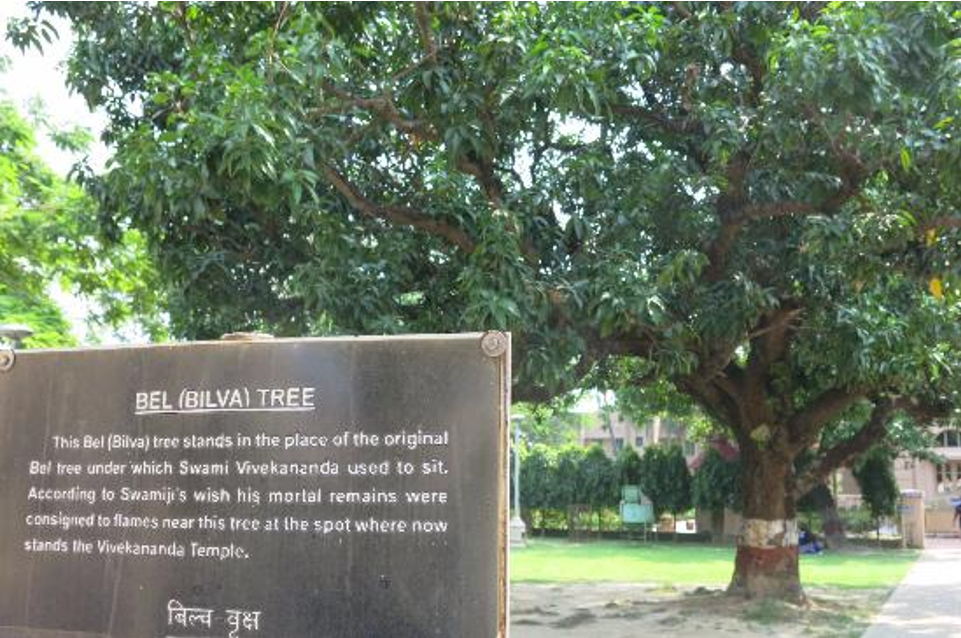
5 pm: Swamiji and Swami Premananda came back to Belur Math. They sat on a bench near a mango tree in the garden of Belur Math. Swamiji said, "I have not felt so well for may days." He talked to Ishwar Chandra Chakraborty (the father of Swami Ramakrishnananda) for some time.

6:30 pm:  He drank a cup of tea with a few monks. 7 pm: The bell announced the evening worship time. Swamiji went to the worship room and attended the daily event. He asked  for a prayer bead, and went to his own room, asking not to be disturbed. 7:45 pm: Swamiji told Brajendra that he was feeling warm and asked to open the windows. He lay down on his bed on the floor. 9:00 pm: Swamiji was lying on his back, then he turned on his right side. Brajendra noticed drops of sweats on Swamij's forehead. 9:02 pm—9:10 pm: He breathed deeply. His hands trembled. 9:30 pm: Everyone of the Math rushed to Swamiji's room. They were unable to decide that if it was a Samadhi.

Swami Bodhananda tried to feel Swamij's pulse and then shouted, "Go immediately and bring Doctor Majumdar." Considering it a Samadhi, Swami Premananda and Swami Nischayananda started chanting the name of Ramakrishna to bring back Swamiji's consciousness. 10:30 pm:  Doctor Mahendranath Majumdar, Swami Brahmananda and Swami Saradananda came to Belur Math. Doctor Majumdar started examining Swamiji's body and found his heart was not pumping. He tried inducing artificial respiration but was unsuccessful. 12:00 midnight: Doctor Majumdar announced Swamiji's death.He said the probable cause was death was a heart attack.


Following is the account of his cremation on 5th Jul 1902 at Belur Math by Chandrasekhar Chattopadhyay (translated from Bengali by Swami Chetatmananda)

“I went to the Ahiritola ghat, crossed the Ganges by boat, and then reached Belur Math at 10:00 am via Salikha (Salkia) and Ghusuri. It was raining a little. I saw that Rakhal Maharaj (Swami Brahmananda) and some monks were busy decorating a cot with flowers in the western veranda of the Math building. When Rakhal Maharaj saw me, he burst into tears. His voice was choked, so he pointed to the steps and indicated that we should go upstairs.

 When I entered Swami Vivekananda’s room I saw that his divine body had been laid on a carpet. His forehead was smeared with holy ashes; a bouquet of flowers was placed near his head; and his body was covered with a new ochre cloth. His right hand was resting on the floor and a rosary had been placed around his right thumb. His eyes were indrawn and half-closed like Lord Shiva in meditation. The entire room was full of fragrance from incense burning at both sides of his body. Sister Nivedita was seated at the left side of Swamiji’s body, steadily fanning his head with a palm-leaf fan. Tears were trickling down her cheeks.

Swamiji’s head was placed to the west and his feet to the east, towards the Ganges. Grief-stricken, Brahmachari Nandalal sat silently at his feet. We all three bowed down to Swamiji, touching his feet, and then sat there. Meanwhile, many distinguished people and devotees from Calcutta and other places arrived to see Swamiji for the last time. One after another they bowed down to him and left; but the three in my party, Brahmachari Nandalal and Sister Nivedita stayed. When I finished my japa, Nivedita whispered to me: ‘Can you sing, my friend? Would you mind singing the songs that our Thakur used to sing?’ I said that I could not sing. Nivedita requested again, ‘On my behalf will you please ask your friend to sing?’
Then my friend Nibaran sang a few songs melodiously: ‘Cherish my precious Mother Shyama tenderly within, O mind’; Nivedita listened to these songs with all her attention. Pent-up emotions overflowed from her heart and began to flow from her eyes as tears. It was an unforgettable and sad scene. 

At about 1:00 pm Swami Saradananda came upstairs to Swamiji’s room and said to Brahmachari Nandalal and the three in my party: ‘Look, we are broken-hearted because of Swamiji’s passing away. We have lost all our strength. Would you be able to carry Swamiji’s body downstairs?’ Immediately Brahmachari Nandalal and we three devotees slowly and carefully carried Swamiji’s body down the steps to the lower veranda and placed it on the cot decorated with flowers. As was the custom, some pomegranates, apples, pears and grapes were offered to Swamiji.

Swami Advaitananda then said to the brahmachari, ‘O Nandalal, Swamiji loved you immensely. You perform the last worship to him.’ When Swami Brahmananda and the other monks approved this proposal, Nandalal performed the ritual offerings of garlands and flowers, and of fruits and sweets, then waving an oil lamp and finally chanting a hymn.


Later, Swamiji’s feet were painted with red dye (alta) and footprints were made on small pieces of cloth. Sister Nivedita also took a footprint on a new handkerchief.  When the worship service was over, Swami Saradananda asked the same four of us to carry the cot to the spot where Swamiji’s body would be cremated. All the monks and devotees followed the procession. Swami Saradananda then asked everyone, ‘Please take a bunch of pankati [the dried stalk of the jute plant], ignite it, circle Swamiji’s body seven times, place the blazing pankati under the cot just below Swamiji’s feet, and bow down to him.’ According to his instructions, Swamiji’s body was consigned to the sandalwood fire, and the grief-stricken monks and devotees sat like statues around the blazing pyre. The funeral fire gradually rose high, extending its many lolling tongues to consume Swamiji’s body. Girish Chandra Ghosh and other devotees were seated on a cement bench near the bel tree and watching this heart-rending scene.

Swamiji's body was wrapped in a saffron cloth. Sister Nivedita wished to take a small portion of that cloth so that she could send it as a memento to Josephine MacLeod. But, she was unsure whether the act would be proper or not and decided not to take it. Around 6 pm in the evening, the burning flame was about to go out. Suddenly Nivedita felt somebody had pulled her sleeve. She turned around and found a small piece of saffron cloth which had somehow come out of the pyre during cremation. Nivedita lifted and took the cloth considering it as a message from the Swamiji himself. In her letter to Josephine MacLeod on 14 September 1902, Sister Nivedita wrote:

“...But your real message came at the burning pyre itself... At 6 o'clock... as if I were twitched by the sleeve, I looked down, and there, safe out of all that burning and blackness, there blew to my feet the very two or three inches I had desired out of the border of the cloth. I took it as a Letter from Him to you, from beyond the grave.”

Swami Vivekananda temple was later constructed at the site of his cremation.
To fulfil Swamiji’s last wish, Kali Puja was held at Belur Math on the first new-moon night (amavasya) after 4 July. No outsiders were invited on that occasion, except for Bhupendranath Datta, Swamiji’s younger brother.