Caraka Saṃhitā - 1.1.6-7

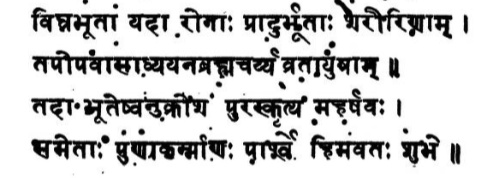
विघ्नभूता यदा रोगाः प्रादुर्भूताः शरीरिणाम् ।
तपोपवासाध्ययनब्रह्मचर्यव्रतायुषाम् ॥ C१,१.६
तदा भूतेष्वनुक्रोशं पुरस्कृत्य महर्षयः ।
समेताः पुण्यकर्माणः पार्श्वे हिमवतः शुभे ॥ C१,१.७
अङ्गिरा जमदग्निश्च वसिष्ठः कश्यपो भृगुः ।
When diseases appeared as impediments to penances, fasts,
study, continence, vows, and life, of
embodied creatures, then great Rishis of righteous deeds, keeping compassion
for all beings before them, assembled together on the auspicious side of
Himavat.
vighnabhūtā yadā rogāḥ prādurbhūtāḥ śarīriṇām /
tapopavāsādhyayanabrahmacaryavratāyuṣām // Car_1,1.6
tadā bhūteṣvanukrośaṃ puraskṛtya maharṣayaḥ /
sametāḥ puṇyakarmāṇaḥ pārśve himavataḥ śubhe // Car_1,1.7
One possible Anvaya
yadā tapa+upavāsa+adhyayana+brahmacarya+vrata+ āyuṣām śarīriṇām
vighnabhūtāḥ rogāḥ prādurbhūtāḥ
tadā puṇyakarmāṇaḥ maharṣayaḥ bhūteṣu anukrośaṃ puraskṛtya himavataḥ śubhe pārśve sametāḥ
vighnabhūtāḥ - became obstacles (6th case Tatpuruṣa, adjective for rogāḥ, masculine, nominative, plural)
yadā – when (indeclinable)
rogāḥ - diseases (masculine, nominative, plural)
prādurbhūtāḥ - appeared, became manifest (avyayibhāva,
adjective rogāḥ masculine,
nominative, plural)
śarīriṇām
– of the embodied [beings] (masculine, genitive, plural)
tapa+upavāsa+adhyayana+brahmacarya+vrata+āyuṣām [Of
the beings practicing] tapas, fasting, study, celibacy, vows and [their] life (dvandva,
masculine, genitive, plural, adjective describing śarīriṇām)
tadā - then
bhūteṣu – regarding, concerning beings (locative of
reference, masculine plural)
anukrośaṃ
- compassion, tenderness (masculine, accusative singular)
puraskṛtya
– having kept before, putting before (indeclinable, gerund)
maharṣayaḥ - the great rishis (masculine,
nominative, plural)
sametāḥ
- gathered (passive past participle, sam-√I , masculine, nominative, plural
puṇyakarmāṇaḥ - they of pure deeds (bahuvrihi,
adjective for the great rishis, masculine, nominative, plural_
pārśve – on the side (neuter, locative, singular)
himavataḥ
- of the himavat mountain (masculine, genitive, singular)

No comments:
Post a Comment